
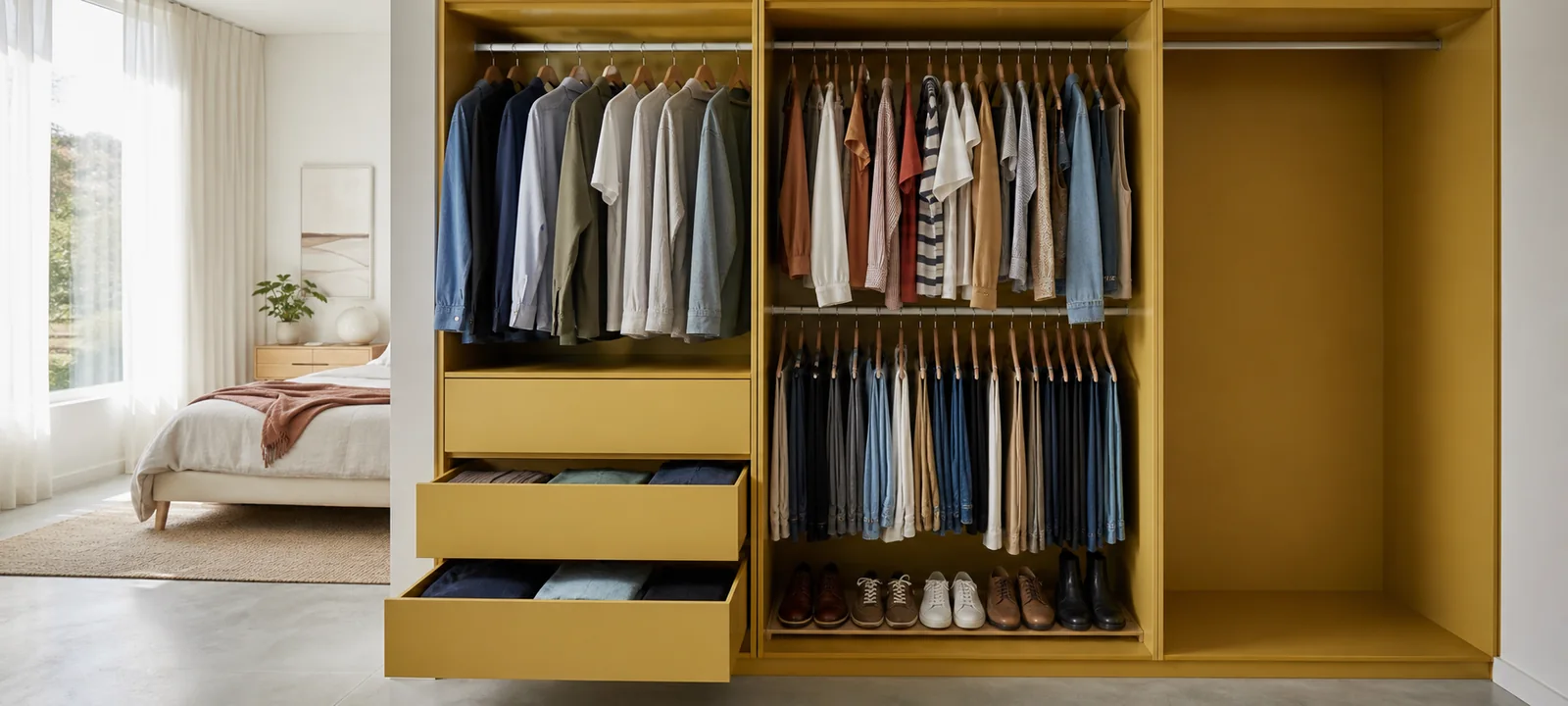
A wardrobe can be full and still fail the clothes worn every week. Uniforms disappear behind occasion wear, shoes occupy the floor and spare linen takes the shelf that would make folded knitwear easier to reach.
Sort the contents before adding organisers. Once clothing is divided into what hangs, folds, leaves the room and leaves the household, the real shortage becomes clearer: rail length, shelf space, drawers or simply too many categories sharing one cupboard.
Begin With the Weekly Wardrobe
Pull out the clothes used for work, school, exercise and ordinary weekends. These deserve the easiest positions. Formalwear, seasonal layers and spare linen can use less convenient zones, provided they remain safe to retrieve.
Make four decisions as you sort: keep here, relocate, repair and remove. Damaged duplicates, clothes that no longer fit and items that have not been worn for years should not determine the organiser you buy. Nor should the main wardrobe become overflow for paperwork, luggage and unrelated household storage.
Measure the Usable Interior
Record internal width, depth and height, then measure each zone separately. Include the clear height below hanging clothes, shelf depth, rail length and the floor area that remains after shoes or baskets are in place.
Sliding doors often block the centre or outer edges of a built-in robe. Hinged doors need swing clearance, while baskets and drawers must clear tracks, carpet, skirting and nearby furniture. Test the withdrawal path rather than assuming anything that fits inside can also come out.
Give Each Zone One Clear Job
Full-height hanging suits dresses, coats and longer garments. Double hanging can work for shirts, trousers and children's clothing. Shelves suit folded knitwear, bags and light seasonal boxes; drawers keep socks, underwear and activewear contained.
Deep shelves and corners behind sliding doors are better for grouped occasional items than loose daily clothing. High shelves should hold light objects that can be handled safely. If a zone has no defined use, it will usually collect the item that is hardest to put away.
Fold, Hang or Move According to the Garment
Hang pieces that crease easily or benefit from staying visible. Fold bulky jumpers and casual clothes that consume rail space. Small accessories need shallow, visible zones rather than a deep basket that must be emptied to find one belt.
Spare linen may work better in a linen cupboard or a measured under-bed container. Our under-bed storage guide covers clearance and access, while Bedding and Linen Basics helps decide how much linen is worth keeping. Items reached for after lights-out belong closer to the bed; see the bedside table guide.
Count Shoes and Accessories Before Adding Racks
Separate everyday footwear from occasional pairs and ask whether both groups need to live in the bedroom. Measure boots as well as low shoes. A rack that fits the wardrobe depth can still be too tall beneath hanging clothes or inaccessible behind a sliding door.
Hooks, trays and narrow baskets can contain jewellery, scarves and belts, but should remain easy to inspect. Check load limits before hanging bags or accessories from a door, rail or removable hook. Over-door organisers also need enough clearance for the door to close without strain.
Choose Organisers for the Remaining Problem
Slim hangers create a consistent rail but do not reduce the number of garments. Hanging shelves add folded compartments at the cost of hanging space. Dividers support small stacks, while deep tubs can hide the contents they are meant to organise.
Mock up the footprint with a box or tape and place the actual clothes inside before buying. Check that a basket can be lifted when full and that a drawer opens without removing the items in front. If folded clothing genuinely needs separate furniture, the drawers and dressers guide explains room clearance and stability checks.
Hanging options for the space that remains
First remove unworn items, group the weekly wardrobe and use the existing rail and shelf heights deliberately. If folded clothes or accessories still lack a visible zone, compare these hanging shelf formats by rail strength, drop length, garment clearance and whether drawers improve or slow access.
Some links below are affiliate links. If you buy through one, we may earn a commission at no extra cost to you. Learn more.
Hanging wardrobe shelves
Amazon Basics 6-Tier Hanging Closet Shelf Organiser
A six-tier hanging shelf for folded clothing where the wardrobe rail, vertical drop and lost hanging width have been measured.
Research-supported option
View at Amazon AustraliaMay suit: folded knitwear and accessories in a tall wardrobe.
May not suit: heavy items or wardrobes already short on hanging width.
Drawbacks to consider:
- It trades hanging width for shelves and soft tiers can sag when overloaded.
- Current dimensions, variant, price, stock and seller details should be rechecked before ordering.
Evidence confidence: moderate. Last reviewed 18 August 2026. Research-based assessment; we have not tested this product firsthand.
Hanging wardrobe shelves with drawers
Amazon Basics 6-Tier Hanging Closet Organiser with Drawers
A hanging fabric organiser with removable drawers for smaller folded categories and accessories behind a wardrobe door.
Research-supported option
View at Amazon AustraliaMay suit: wardrobes needing contained storage for small folded items.
May not suit: weak rails or wardrobes with long garments below.
Drawbacks to consider:
- The drawers add weight and still rely on a strong rail and adequate vertical clearance.
- Current dimensions, variant, price, stock and seller details should be rechecked before ordering.
Evidence confidence: moderate. Last reviewed 18 August 2026. Research-based assessment; we have not tested this product firsthand.
Treat Freestanding Storage as Furniture
A narrow drawer unit or garment rack can solve wardrobe overflow and create a new obstruction in the bedroom. Check the base, stability, load limits and assembly instructions, particularly where children live or visit.
Since 4 May 2025, an Australian mandatory information standard has required warnings for covered toppling furniture, including clothing-storage units at least 686 mm high. The ACCC consumer guide to toppling furniture explains the warning labels, anchoring and stability checks to look for. Follow the product instructions and use fixings suitable for the wall or floor; renters should obtain approval before anchoring.
Keep Seasonal Storage Light and Dry
Higher shelves can hold labelled, lightweight containers of winter clothing or formalwear. Bulky doonas may be better elsewhere if they crowd daily clothes. Vacuum bags reduce volume for some textiles but can become heavy and awkward, so check care guidance and do not compress items merely to fill every gap.
Clothing, shoes and towels should be clean and fully dry before they enter closed storage. Overfilled wardrobes are difficult to vacuum and allow little room to inspect for moisture or pests. Leave enough space to move garments and wipe shelves rather than packing from the rail to the floor.
Make the System Easy to Reset
Shared wardrobes work better with visibly separate rail, shelf or drawer zones. A temporary basket for clothes that have been worn but are not dirty can prevent a chair pile, but it needs a regular reset. Clean clothes also need spare capacity to return; a wardrobe filled to its limit will fail again after the first laundry load.
In a rental, removable baskets and freestanding inserts are often easier to reverse than new rails or fixed shelves. Check the lease before drilling and do not assume adhesive or pressure systems are mark-free.
Check the Wardrobe Before Buying
- Sort clothing, shoes, linen and accessories before choosing organisers.
- Measure internal zones, door access and the path needed to remove each container.
- Keep weekly clothing visible and occasional items in lighter, less accessible zones.
- Test racks, baskets and dividers with the items they will hold.
- Follow load limits and toppling-furniture warnings for freestanding units.
- Leave enough capacity for clean clothes to return and for the wardrobe to be cleaned.
Improve the part of the wardrobe that causes the most daily friction, then stop and use it for a while. A sorted cupboard with one well-fitted organiser will usually work better than a crowded system assembled from products that each looked useful on their own. Browse the Bedroom category and our small bedroom storage guide for the rest of the room.
Common Questions
How do I organise a small wardrobe with lots of clothes?
Build the wardrobe around what is worn in an ordinary week. Group those clothes by the action used to return them, then move seasonal, rarely worn or unrelated items out of prime space. Give each rail, shelf and drawer one clear job before adding organisers, so extra capacity does not hide an unsorted collection.
What should I measure before buying wardrobe organisers?
Measure the usable internal width, depth and height, not just the wardrobe's outside dimensions. Account for hinges, sliding doors, rails, shelf supports and any space needed to remove a basket or open a drawer. Then measure the folded, hanging or shoe category the organiser is expected to hold.
Which clothes should be hung and which should be folded?
Choose according to the garment and the space that genuinely works. Hang pieces that benefit from remaining shaped and visible, and fold categories that stack reliably without being forgotten. Do not force every item into the same method; the best system is the one that makes weekly clothes easy to return.