
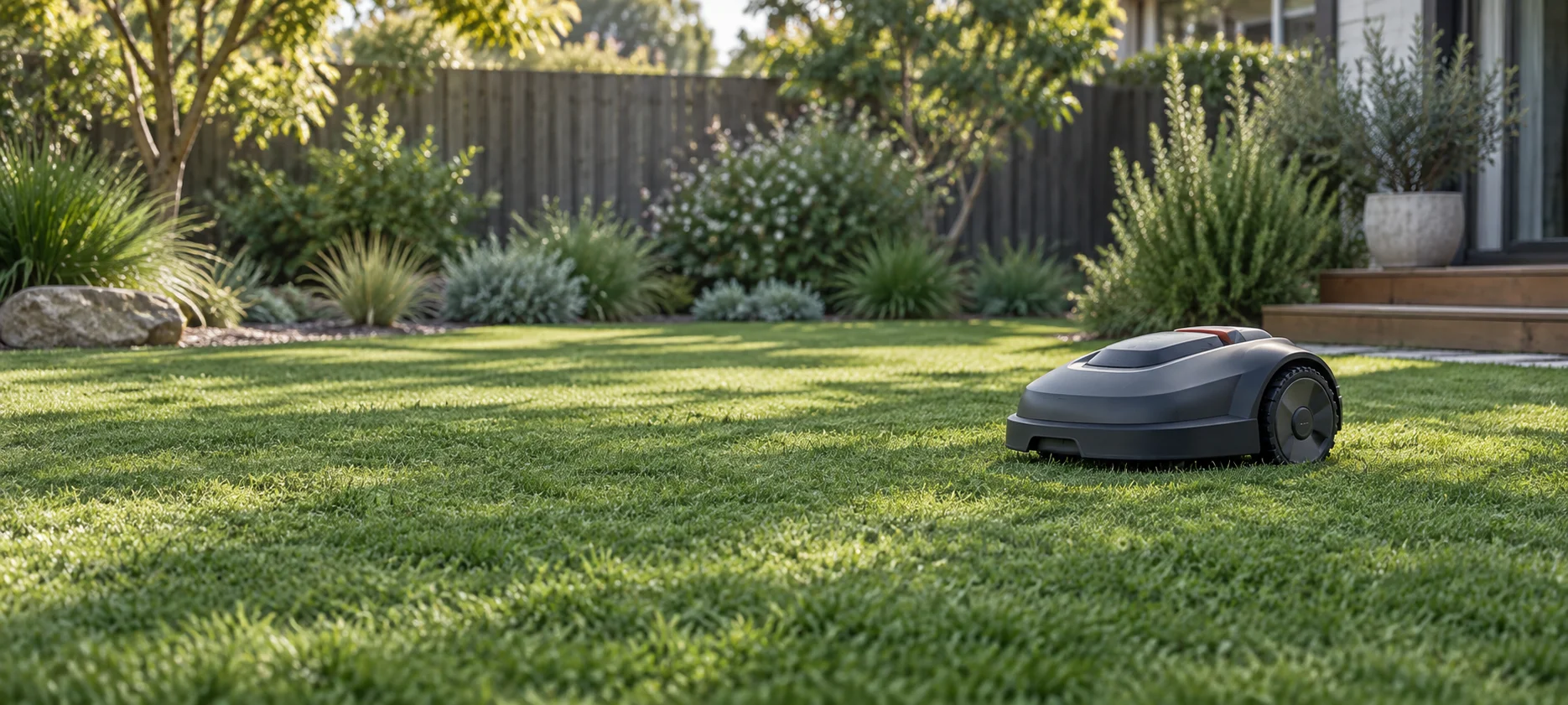
Compare product fit and check retailer availability
A robot mower may handle the back lawn neatly and still leave you carrying it through a gate to reach the front. A steep edge, poor satellite reception or a cutting height that does not suit your grass can matter more than the advertised lawn capacity.
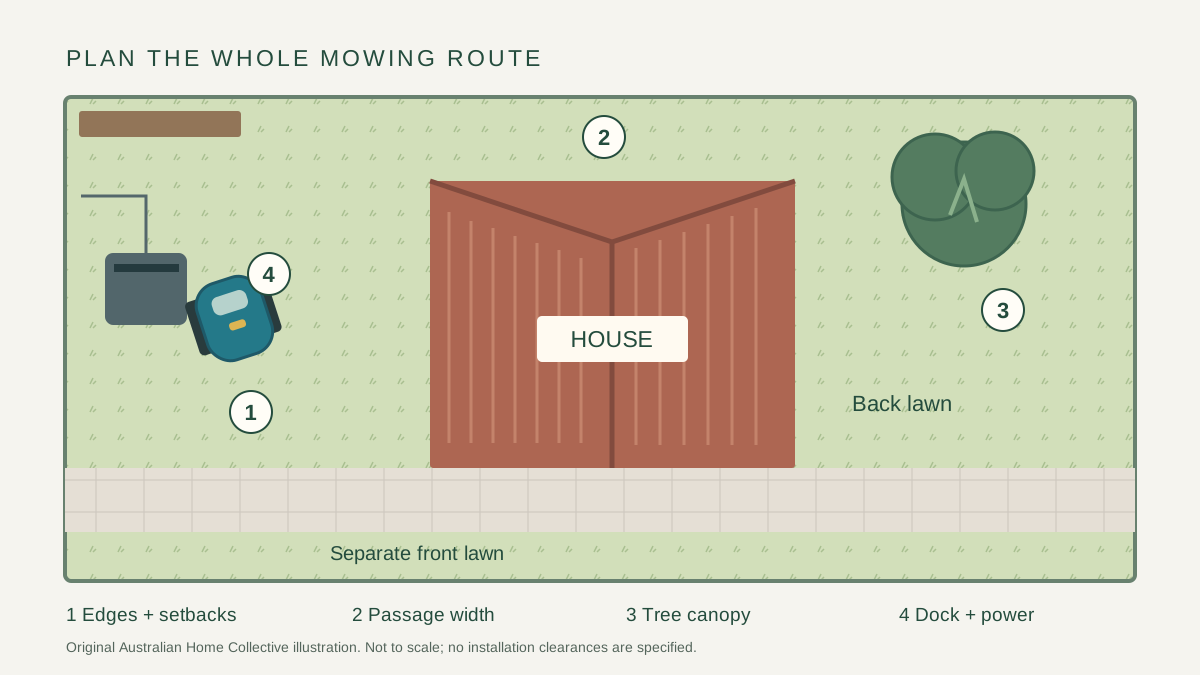
Start with a sketch of the yard and the work you want to reduce. Australian Home Collective’s guide explains what to check before choosing a mower; it is research-based guidance, with no claim of firsthand product testing.
Measure the lawn, then check the available mowing time
Measure the grass to be cut, excluding the house, paving, pool and garden beds. Split irregular lawns into simple shapes, estimate each area in square metres and add them together. Record disconnected sections separately.
A capacity figure is not necessarily the area covered on one charge. Check the operating hours, terrain and mowing pattern behind it. Charging and travelling between areas also take time. Ask whether the mower can maintain your measured lawn during the hours you will actually allow it to run, including peak growth.
A household reserving afternoons for children and pets has a different schedule from an empty yard. Do not assume a mower rated exactly at your lawn area has spare capacity for those restrictions.
Trace every passage, gate and lawn edge
Walk the route from the charging station to every lawn section. Measure the narrowest usable passage, including turns, and compare it with the installation instructions. Mower body width alone does not establish passage clearance.
Mark steps, raised paving, exposed roots, holes, sprinkler heads and low furniture. Ask how the model handles a separate lawn: automatic travel, another charging station or manual carrying may be required. “Multi-zone” does not mean it can cross steps or a closed gate.
Check the border beside walls and garden beds. Some grass may still need trimming; an edge-cutting feature does not establish the result at every boundary. Keep required setbacks separate from the physical lawn edge on your sketch.
Measure slopes where the mower must turn
Check the steepest working area and the slope along boundaries, particularly near retaining walls. A model may have a lower permitted slope at its boundary than inside the lawn. Wet ground, ruts and abrupt changes in level also need assessment.
Percent gradient and degrees are different. A rise of 20 cm over a horizontal distance of 100 cm is a 20% gradient, approximately 11.3 degrees. Measure the horizontal run, not the distance along the sloping surface. If access is unsafe, have the site assessed.
Copy the exact model’s limits and measuring method. A headline slope rating is not approval for a bank beside a drop or pond.
Choose navigation for the yard you have
- Boundary wire: A physical wire defines the working area. It needs installation and may need repairs or repositioning when garden beds change. Check any guide-wire requirements too.
- Satellite navigation: RTK, or real-time kinematic positioning, uses correction information to refine satellite positioning. Trees and buildings can affect reception. Check whether the system needs a local reference station, internet coverage or an ongoing service.
- Camera or LiDAR navigation: Cameras interpret images; LiDAR measures distances using laser light. Some systems combine these with satellite positioning. Ask how the exact model handles your shaded passages, lawn edges and obstacles.
“Wireless” does not mean every model uses the same technology or needs no setup. Request a site assessment or demonstration in the difficult parts of your yard, and establish what happens if positioning or connectivity is lost.
Match cutting height to your grass
Identify the grass variety and suitable mowing height before comparing adjustment ranges. Buffalo, couch and kikuyu should not automatically receive the same setting. Our lawn care guide helps you assess the lawn first.
Many robot mowers maintain grass by cutting small amounts frequently and leaving fine clippings behind. Check how to prepare an overgrown lawn and adjust the schedule through growth and dormancy. Do not assume a robot will clear long, neglected grass or collect leaves.
An RTK option needs a different yard check
The Ecovacs GOAT O600 RTK adds a satellite-guided option alongside the camera-based eufy models. Ecovacs states a 600 m² working capacity, 19 cm cutting width and 30–80 mm cutting-height range. The capacity is a maintenance rating, not a promise to cut that area on one charge or within your available mowing window.
The Australian product page and linked instruction manual require a flat, open charging position and suitable reference-station reception. The manual recommends locating the reference station at least 2 m from buildings and trees. Its working-slope limit of 45% is approximately 24 degrees, while a virtual boundary must not be placed on a slope above 17%. The O600 cannot mow in low light; its docking light does not enable night mowing.
Digital Reviews Network’s Australian hands-on review, using a mower supplied by Ecovacs, found useful routine mowing but persistent uncut edges after repeated remapping. Separate owner reports describe return-to-dock trouble around barriers. Treat it as an option for a straightforward lawn and verified docking route, with edge trimming still in the routine. AHC has not tested it firsthand.
The GOAT O600 RTK has a two-year warranty. Check the Australian warranty terms for battery exclusions, consumable parts and the claims process before purchase.
Compare camera-based and RTK mower options
First confirm the grass, boundaries, daylight mowing window and station location, then compare the navigation and capacity. The eufy models suit mostly flat, clearly bounded lawns and exclude buffalo (St. Augustine) and dense Zoysia; their 800 m² and 1,200 m² figures are map limits. The Ecovacs has different setup requirements. None removes edge trimming or obstacle clearing.
Some links below are affiliate links. We may earn commission at no extra cost to you. Learn more.
Compare the fit, main drawback and retailer availability for each option.
| Option | May suit | Check first | Retailer prices and availability |
|---|---|---|---|
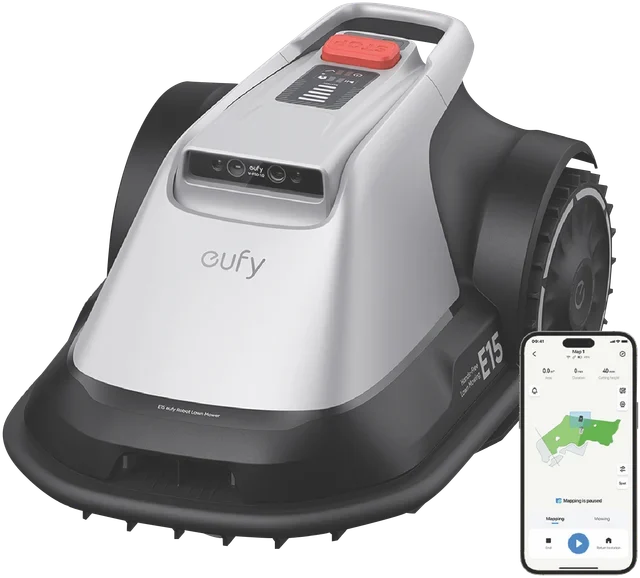 eufy E15 Robot Lawn Mower Camera navigation · 800 m² mapping limit | contained, mostly flat lawns below 800 m², with compatible grass and time for daylight mowing | Mapping can miss patches or need adjustment; wet or uneven ground can cause slipping and manual rescue. | |
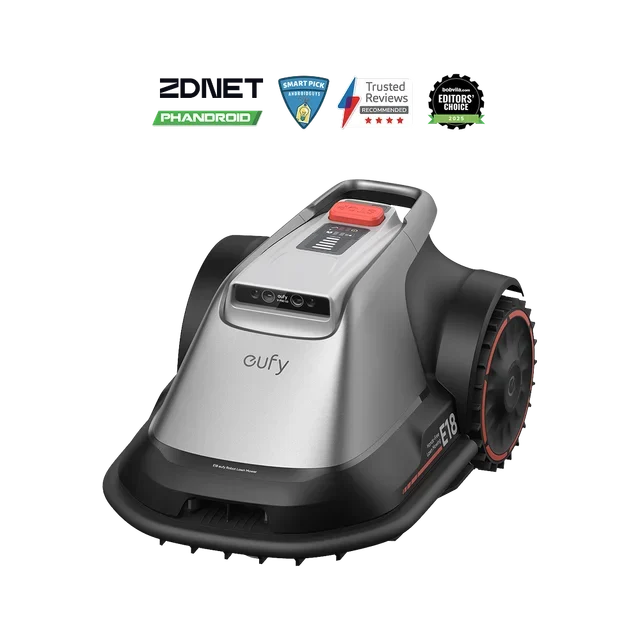 eufy E18 Robot Lawn Mower Camera navigation · 1,200 m² mapping limit | contained, mostly flat lawns below 1,200 m², with compatible grass and time for daylight mowing | Owners report mapping adjustments, repeated passes and lengthy coverage; a larger map does not mean faster cutting. | |
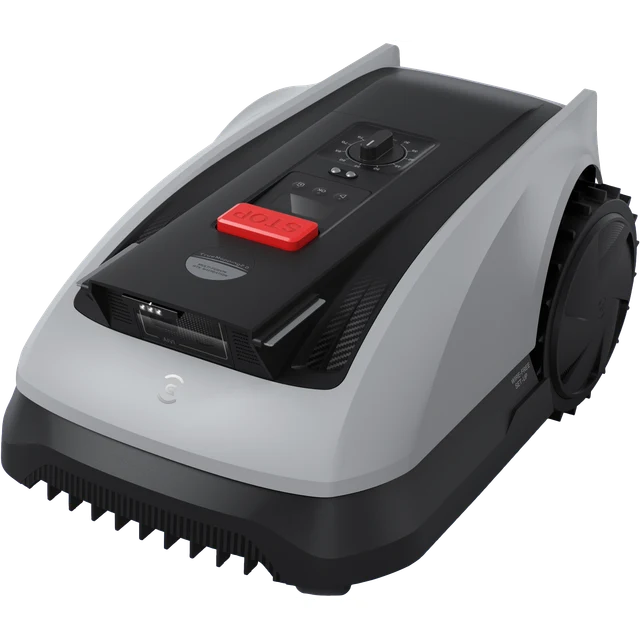 Ecovacs GOAT O600 RTK Robot Lawn Mower RTK navigation — up to 600 m² stated working area | a measured lawn with suitable satellite reception, straightforward docking access and daylight mowing time | An Australian hands-on review reports missed edges despite remapping; owner reports also describe docking trouble around barriers. Expect edge trimming and verify the difficult routes before relying on it. |

More about each option
Camera navigation · 800 m² mapping limit
eufy E15 Robot Lawn Mower
A camera-based option for a mostly flat, clearly bounded lawn below 800 m². The smaller mapping allowance suits a compact layout; it still needs daylight and regular edge trimming.
Check today’s price and postcode delivery:
We may earn commission through these links.
Good fit for
contained, mostly flat lawns below 800 m², with compatible grass and time for daylight mowing
Check before buying
Mapping can miss patches or need adjustment; wet or uneven ground can cause slipping and manual rescue.
Research-supported option
More suitability and drawbacks
May suit: contained, mostly flat lawns below 800 m², with compatible grass and time for daylight mowing.
May not suit: buffalo (St. Augustine) or dense Zoysia grass, rough or wet ground, exposed drops or street edges, or households expecting no manual intervention.
Drawbacks to consider:
- Mapping can miss patches or need adjustment; wet or uneven ground can cause slipping and manual rescue.
- Edges still need trimming. Closed gates, low light and charging interrupt coverage.
- Plan fault returns through Anker/eufy support; blades, servicing and installation add to ownership costs.
Evidence confidence: moderate. Last reviewed 13 September 2026. Research-based assessment; we have not tested this product firsthand.
Camera navigation · 1,200 m² mapping limit
eufy E18 Robot Lawn Mower
A camera-based option for a mostly flat, clearly bounded lawn below 1,200 m². The larger map allowance helps with more lawn; allow multiple mowing and charging sessions.
Check today’s price and postcode delivery:
We may earn commission through these links.
Good fit for
contained, mostly flat lawns below 1,200 m², with compatible grass and time for daylight mowing
Check before buying
Owners report mapping adjustments, repeated passes and lengthy coverage; a larger map does not mean faster cutting.
Research-supported option
More suitability and drawbacks
May suit: contained, mostly flat lawns below 1,200 m², with compatible grass and time for daylight mowing.
May not suit: buffalo (St. Augustine) or dense Zoysia grass, rough or wet ground, exposed drops or street edges, or households expecting no manual intervention.
Drawbacks to consider:
- Owners report mapping adjustments, repeated passes and lengthy coverage; a larger map does not mean faster cutting.
- Edges still need trimming. Closed gates, low light and charging interrupt coverage.
- Plan fault returns through Anker/eufy support; blades, servicing and installation add to ownership costs.
Evidence confidence: moderate. Last reviewed 13 September 2026. Research-based assessment; we have not tested this product firsthand.
RTK navigation — up to 600 m² stated working area
Ecovacs GOAT O600 RTK Robot Lawn Mower
An RTK-guided mower with a stated 600 m² working capacity, 19 cm cutting width and 30–80 mm cutting height. It adds a satellite-based option for a suitably mapped lawn with an open reference-station location and a clear route back to the dock. The retailer lists this as an online-only supplier-order item; confirm the delivery estimate before buying.
Good fit for
a measured lawn with suitable satellite reception, straightforward docking access and daylight mowing time
Check before buying
An Australian hands-on review reports missed edges despite remapping; owner reports also describe docking trouble around barriers. Expect edge trimming and verify the difficult routes before relying on it.
Research-supported option
More suitability and drawbacks
May suit: a measured lawn with suitable satellite reception, straightforward docking access and daylight mowing time.
May not suit: low-light schedules, obstructed docking routes or expecting completely hands-off edge cutting.
Drawbacks to consider:
- An Australian hands-on review reports missed edges despite remapping; owner reports also describe docking trouble around barriers. Expect edge trimming and verify the difficult routes before relying on it.
- The manual rules out low-light mowing. A 45% working-slope limit is about 24°, not 45°; virtual boundaries must not be placed on slopes above 17%.
- The two-year warranty does not remove the need to check battery exclusions, consumable parts and the Australian claims process before buying.
Evidence confidence: moderate. Last reviewed 18 October 2026. Research-based assessment; we have not tested this product firsthand.
The eufy offers retain their dated seller checks; the Ecovacs was listed in stock at The Good Guys on 18 October 2026. Confirm the exact model and postcode-specific supply before ordering. Supervise the first runs and check the difficult edges and docking route.
Plan safety before setting a schedule
Keep children, pets and other people out of the mowing area during operation. Clear toys, hoses, fallen branches and animal waste. Check for wildlife before starting and choose daylight mowing windows that avoid times animals use the lawn. Sensors are not a guarantee that every animal or small object will be detected.
Ask the installer to assess ponds, drops, driveways and public access, including required barriers and setbacks. Do not rely on a virtual boundary as a physical safety barrier. Follow the shutdown procedure and wait for blades to stop before lifting, clearing or maintaining the mower.
Check the exact model and serial number in ACCC Product Safety’s recall database, including for second-hand purchases. Use the specified battery and charging equipment; Fire and Rescue NSW explains battery purchasing, charging and disposal precautions.
Price the installation and the work that remains
Have the supplier itemise boundary equipment, station placement, mapping, any antenna and electrical work. Check a suitable power supply position, docking clearance, drainage, sun exposure and protection of cables. Do not assume the mower, power supply and station share the same weather rating.
Allow for blades, battery replacement, servicing, electricity, optional connectivity subscriptions and repairs. Establish who services the exact Australian model locally, written warranty terms and how repairs are transported. Ask which app functions require an account or cloud connection and how long software support is promised.
Compare that total with keeping your mower or using a lawn service, including remaining edge trimming and obstacle clearing. Frequent carrying between small lawns may erode the time saved.
Before you buy
- Record actual lawn areas, passage widths and slopes with their units.
- Confirm navigation, grass height and capacity for your available mowing hours.
- Resolve hazards, station placement and installation requirements.
- Get the complete quote, maintenance costs and service arrangements in writing.
Print the A4 yard-assessment worksheet and take your sketch and unresolved questions to the supplier before ordering.