
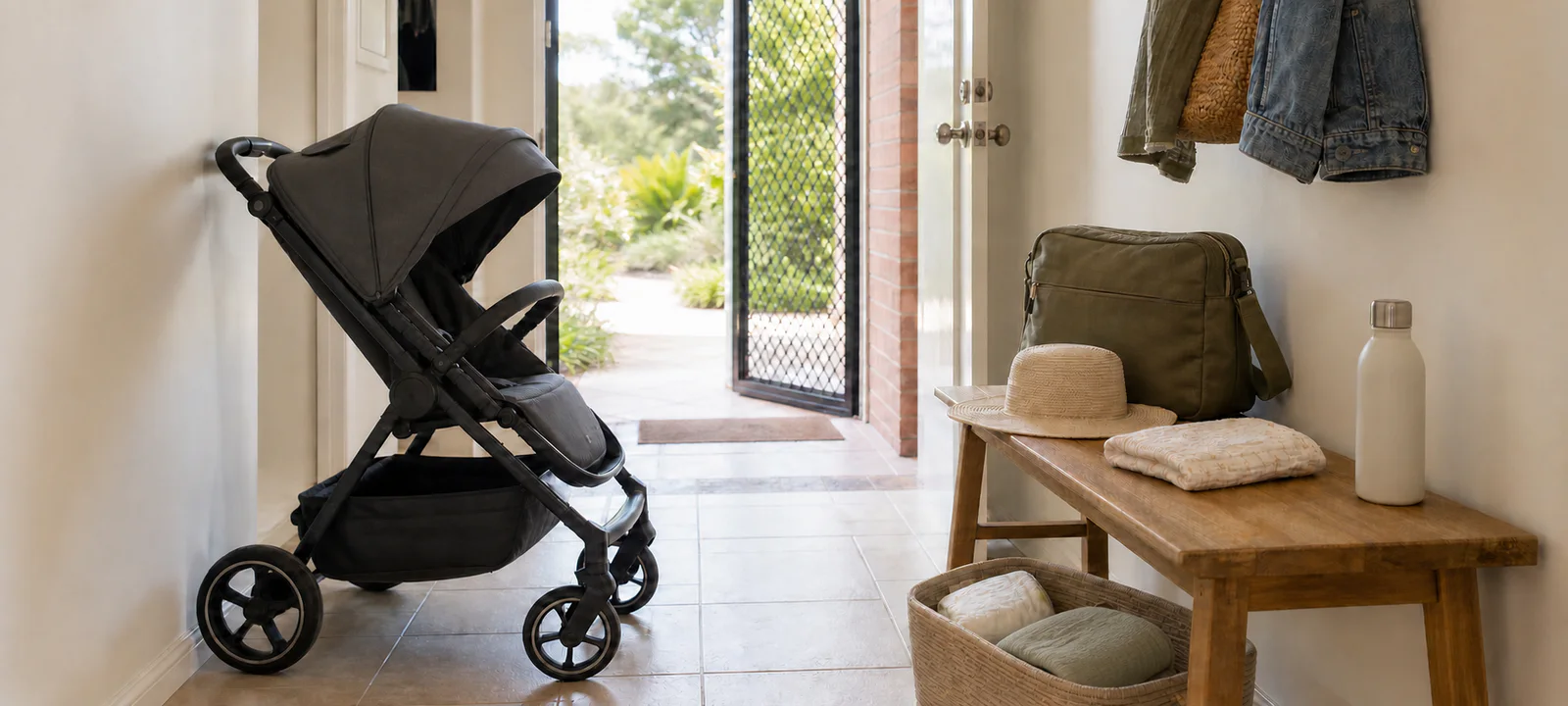
A short outing can acquire the packing list of a weekend away. Nappies, clothes, feeding gear and weather layers fill the bag until the wipes—the item needed first—disappear at the bottom.
Pack for the trip in front of you. Keep a small change kit ready, add feeding and weather items for that outing and use a bag another carer can understand at a glance. More capacity is useful only when it remains comfortable to carry and quick to reset.
Match the bag to the usual outing
Write down the trips the family actually makes: a supermarket run, an appointment, a walk, daycare drop-off, a long drive or a full day with relatives. A 30-minute errand and a beach day should not leave the house with identical bags.
| Outing | Likely additions | Packing approach |
|---|---|---|
| Short local trip | change kit and one spare outfit | small load that is ready to go |
| Appointment or visit | feeding items, comfort item and timing buffer | routine-based pouches |
| Full day out | additional changes, food and weather gear | larger bag with clear wet-item separation |
| Car trip | travel-specific feeding and clean-up backup | main bag plus a small accessible reserve |
Keep one change kit ready
Group nappies, wipes, a portable change mat, nappy bags or a wet bag, cream if used and a complete spare outfit. The kit should come out with one hand rather than being spread across several pockets.
Check it after each outing. Replace used nappies and clothes, remove rubbish and let damp items dry or move to the laundry. The nappy change station checklist can help align the travel kit with the home routine.
Choose access before maximum volume
Load the bag with the real contents before judging it. Nappies and wipes should be reachable without removing food or clothes. Bottles need an upright, appropriate position; wet or dirty items need separation; adult keys and phone need somewhere deliberate.
- Try the straps while holding the baby or pushing the pram.
- Check the packed weight, not the empty display bag.
- Make sure the zip opens without the contents falling out.
- Confirm the bag fits the pram basket, car or other usual transport.
- Choose linings and pouches that can be wiped or washed.
Too many compartments can be as confusing as none. Give each routine one obvious place and make the system simple enough for another adult to use without instructions.
Do not turn the pram handle into storage
Check the pram manufacturer's instructions before adding any organiser or bag. Australian Product Safety warns that weight added to handles can tip a pram and recommends centrally located under-pram storage. Its pram safety guide also covers brakes, tether straps, harnesses and safe use.
An allowed organiser should remain within its stated load, clear folding and adjustment points, and not swing or expose hot drinks and valuables. Use it for a small number of reachable items—not as a substitute for the storage the pram is designed to carry.
Pack feeding items from current guidance
Feeding needs vary with the baby's age and routine. Work out how long the family will be away, what needs temperature control, what must remain clean and how used containers will return home.
Formula should be prepared and transported according to the tin instructions and current health advice. Raising Children Network explains that the safest travel approach is to carry cooled boiled water and formula powder separately; its formula preparation and transport guide gives the time and temperature details.
For expressed breastmilk, use current storage and transport guidance and clean collection and storage equipment appropriately. Raising Children Network's expressing and storing breastmilk guide covers transport as well as home storage.
Solids and snacks bring their own allergy, choking, hygiene and temperature considerations. Follow the baby's health advice and the food or container instructions rather than relying on the bag's insulated pocket alone.
Add weather gear for the day, not the season
Check the forecast and destination before leaving. A sun hat, rain cover or light layer may be sensible; carrying every possible layer on every local errand makes the bag harder to use.
Any pram shade, cover or accessory should be used according to the pram and accessory instructions. Keep the baby supervised and watch temperature and airflow. Bulky items that are rarely used can stay near the door and be added when conditions call for them.
Use the car stash only as backup
A small reserve of nappies, wipes, dry clothes and a wet bag can rescue an outing, but the car experiences heat, direct sun and long gaps between checks. Do not leave medicines, food, feeding products or temperature-sensitive items there unless their instructions clearly support those conditions.
Date the backup pouch and review it regularly for size, cleanliness, damage and expiry. Bring used or damp items inside after the trip; the car stash should not become a forgotten second nappy bag.
Separate clean, wet and used items
A wipeable change mat, leak-aware feeding section and washable wet bag help keep a small accident from affecting the whole bag. Check whether seams collect crumbs, the lining can be reached and removable pouches can dry fully after cleaning.
Do not seal damp clothes or towels in the bag after returning home. Empty the bag near the laundry, wipe spills and leave cleaned sections open to dry before repacking.
Use only a few obvious pouches
Three groups are often enough: change, feeding and spare clothes. Add a wet-item pouch or a small parent pocket if the routine needs them. Colour, texture or a simple label can help a second carer find the right group quickly.
If every item has its own zipped case, the system has become slower than the loose bag it replaced. A pouch should bring a routine out together and return to the same position.
Leave room for the person carrying the bag
Keys, phone, wallet, water and any adult care items need a secure, reachable position. The bag should remain comfortable while somebody holds the baby, folds the pram or manages a door.
Try the normal sequence at home: pick up the bag, carry the baby, open the door and retrieve wipes. If straps slip, valuables are exposed or the bag has to be emptied to reach a nappy, change the layout before buying more accessories.
Run a normal-outing test
- Pack only for the outing type you do most.
- Check the bag's weight and comfort when full.
- Reach nappies, wipes and a spare outfit without unpacking.
- Confirm feeding items follow current storage guidance.
- Keep wet and used items separate from clean supplies.
- Use only pram storage and attachments permitted by the manufacturer.
- Make sure another carer can understand the system.
- Remove anything that returns unused on almost every trip.
Pack enough, then stop
A good outing bag is not a miniature nursery. It holds one clear change routine, the food and weather items needed today, and a small amount of sensible backup.
Reset it when the family gets home. That five-minute habit keeps sizes, dates and supplies current—and makes the next departure much easier than another oversized organiser ever will.
Connect the Outing Kit to Home Routines
Keep the bag linked to the places where supplies are washed, replaced and stored. The nursery essentials guide and Nursery & Kids guides cover the wider care setup. For washable items, the Laundry guides and laundry basket guide can help create a clear return point after an outing.
Common Questions
What should you pack when leaving the house with a baby?
Start with one ready change kit containing nappies, wipes, a change mat, bags or a wet bag and a complete spare outfit. Add only the feeding items, comfort item and weather gear needed for that outing, then keep a small accessible reserve for longer car trips.
How do you organise a baby bag so essentials are easy to find?
Use a few obvious groups rather than many tiny pockets. Keep the change kit where it can be removed with one hand, separate clean items from wet or used items and arrange the bag so another carer can understand it quickly. Reset each group after returning home.
How can you avoid overpacking a baby bag?
Match the bag to the trip in front of you instead of packing for every possible day. Test it on a normal outing, note what was actually used and remove items that only add weight or hide essentials. Leave enough room for the person carrying it to move comfortably.