
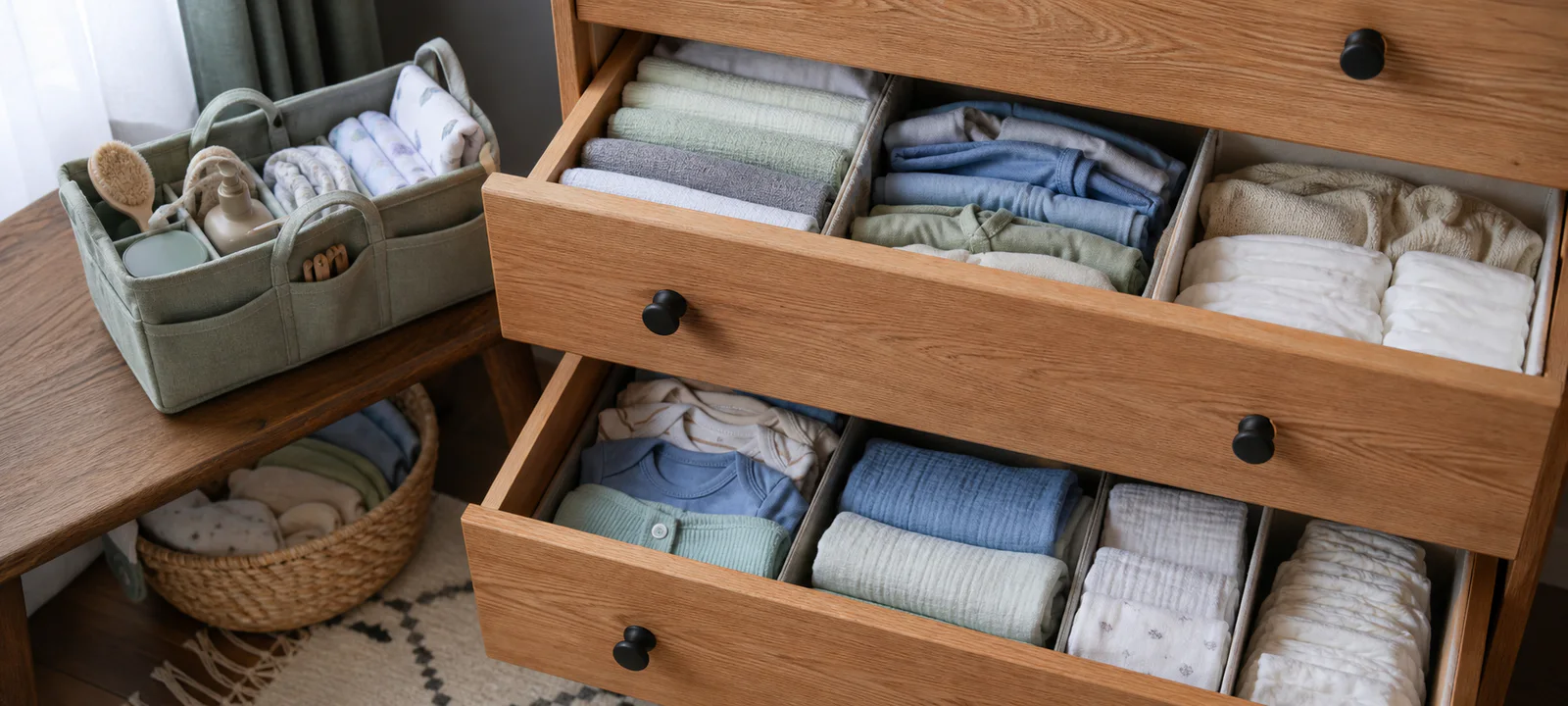
Preparing for a newborn can feel like being handed a very long list at the exact moment your brain would prefer a cup of tea and a lie down. Strip it back to safe sleep, feeding, nappies, washing, transport and a few comfortable clothes.
This is not a checklist to finish in one weekend. It separates what you will need early from the things that can wait, so the nursery is not full before the baby arrives and the household has room to adjust once the routine becomes real.
The first things to sort out
A safe sleep space
Choose a cot or bassinet that suits your room, has a firm mattress and uses fitted sheets made for that exact size.
Keep pillows, loose blankets and decorative soft items out of the sleep space.
Nappies and a practical change setup
Choose a change table, mat or floor setup that can be used according to its instructions while supplies remain within adult reach.
Simple layers
Zip suits, singlets, socks and layers for the season are usually easier than fussy outfits in the early weeks.
A way to travel safely
Plan for a correctly fitted car restraint and a pram or carrier that suits your home, transport and local footpaths.
Do not buy for routines you have not met yet
Monitors, bottle warmers, wipe warmers, large toy collections and specialist organisers may become useful, but they are rarely the difference between prepared and unprepared. Decorative soft items do not belong in the baby's sleep space.
If you are considering a monitor, compare whether you need audio, video or app access, and check camera placement, cord safety, range, battery life and privacy settings.
Compare the items that change the room
Swipe sideways to compare the full table.
| Item | Useful for | What to consider |
|---|---|---|
| Bassinet or cot | A dedicated sleep space that meets current safety expectations. | Room size, mattress fit, ventilation, age and weight limits, and whether it suits overnight sleep. |
| Change mat or change table | Nappy changes with supplies close to hand. | Stability, surfaces that can be wiped down, storage, height and whether it works in a small bedroom or bathroom. |
| Pram or carrier | Getting out for appointments, walks and everyday errands. | Car boot space, footpaths, stairs, public transport and how heavy it feels when folded. |
| Swaddles or sleep suits | Helping some newborns settle while keeping bedding minimal. | Fabric weight for the season, sizing, hip-friendly design and when to stop swaddling. |
Plan for the weather and the room you have
Think about summer heat, winter room temperature, rental limitations, storage space and how often you will need to move items between rooms. A compact, washable setup can be more useful than a nursery arranged for a photo but awkward to use.
Buy only a small group of clothes that fit now and suit the season. Feeding supplies should match the approach you plan to begin with while leaving room to change after advice or experience. Bath items need somewhere to dry; nappies and wipes need a restock point rather than an entire cupboard beside the change mat.
Consider each second hand item separately
Used clothing, washable storage and some furniture may be reasonable when their condition is clear. Safety-sensitive products need a stricter check. Avoid anything with missing labels or instructions, an unknown history, damage, incomplete parts or an unresolved recall.
Do not assume that a hand-me-down mattress fits a different cot or bassinet, or that an older restraint remains suitable because it looks intact. Check the exact product, its history and the current guidance for that category.
Keep the first list short
- Safe sleep space, fitted sheets and sleepwear suited to the season.
- Nappies, wipes, barrier cream if used and a suitable changing setup.
- Several outfits that are easy to change and fit now.
- Feeding supplies that match your planned approach, with room to adjust later.
- Baby bath basics, soft towels and gentle laundry planning.
- Correctly fitted car restraint before the first trip home.
Use current Australian guidance for the safety decisions
For sleep, start with Red Nose safe sleep advice and the specific ACCC Product Safety bassinets and cradles guide. The broader Product Safety Australia website carries product guidance and recall information, including specific bathing and changing advice.
Use Child Car Seats Australia when comparing restraints and fitting information. Read these sources alongside product instructions and qualified professional advice where relevant. The detailed Red Nose safe sleeping guide sets out the current recommendations for babies aged 0–12 months.
Leave room for the baby to change the list
Prepare the safety and care basics, but keep receipts, packaging and spare space where practical. The first weeks will show which clothes are easiest, where changes happen and which feeding or bath supplies are genuinely useful. That information is worth more than completing a generic newborn list before the baby arrives.
Common Questions
How many newborn clothes are useful?
Keep enough simple layers for frequent changes and the gap between laundry loads, without filling drawers with one size. A small mix of newborn and the next size is often more practical because fit, season and growth are uncertain. Start modestly, then add what the real washing routine shows is missing.
Should everything be ready before the baby arrives?
No. Prepare the current safe-sleep, travel, changing, clothing and basic care needs, then leave room for the baby and household routine to shape the rest. Items tied to feeding preferences, room layout or an imagined future routine can usually wait until there is a repeated need to solve.
Are expensive nursery items always better?
Not automatically. Price and styling do not replace checks for fit, current guidance, product instructions, cleanability, durability and everyday use. A modest item that fits the room and routine can be more useful than an elaborate one that crowds the space, creates extra washing or solves a problem the household does not have.