
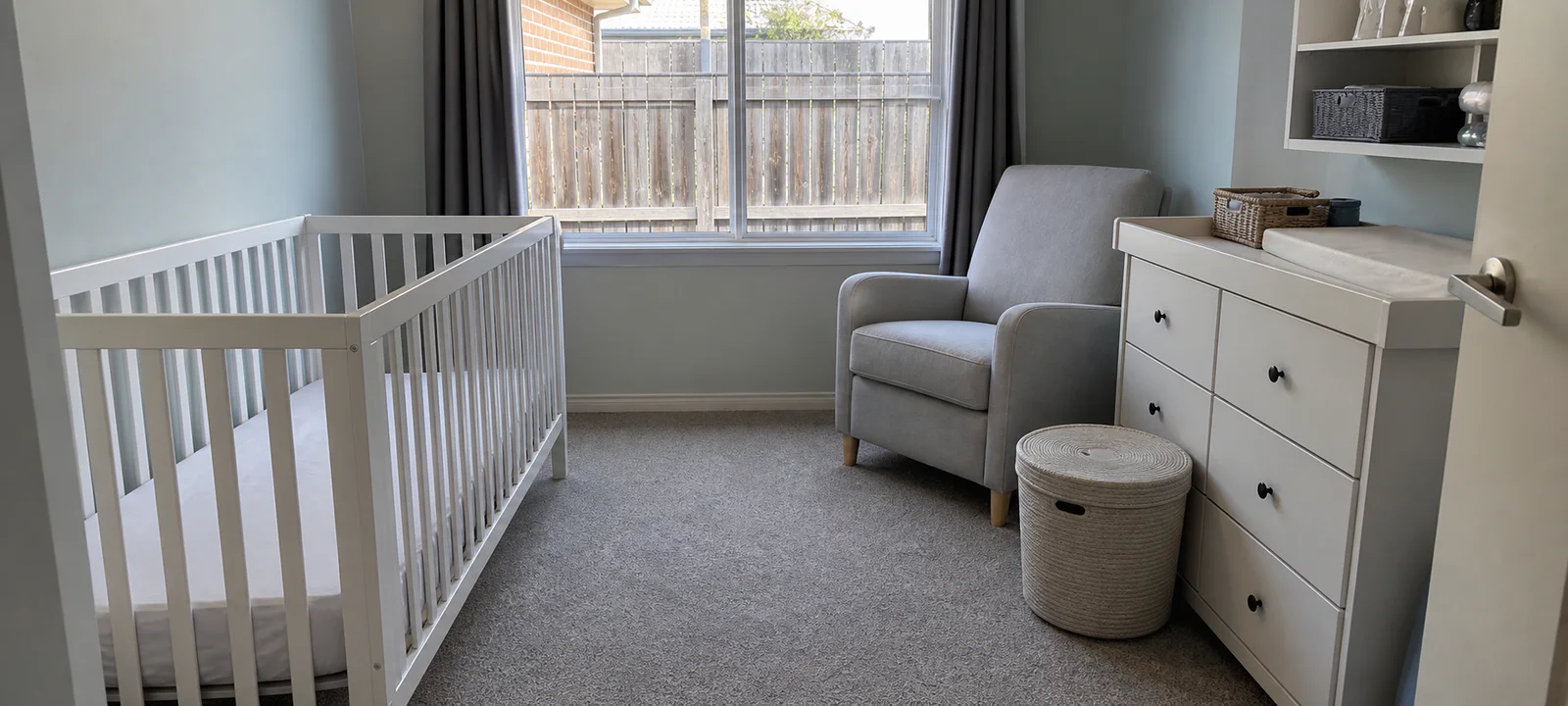
A nursery shopping list can grow faster than the room. A baby still needs a safe place to sleep, somewhere to be changed, clothes, feeding supplies and a few care items within reach. The rest can develop after the household knows which routines need help.
The room does not have to be large or expensive. It has to work during an overnight change, leave clear space to move and suit the climate and layout of the home. In many families, the first “nursery” is a safe sleep space in the parent or caregiver's room and a portable change caddy.
The nursery basics at a glance
Swipe sideways to compare the full table.
| Item | Useful for | What to consider |
|---|---|---|
| Safe sleep space | A cot, bassinet or bedside sleeper that suits the baby's age and the room layout. | Applicable product standards, mattress fit, assembly instructions and current safe sleep guidance. |
| Changing setup | Nappy changes with supplies close enough to reach without leaving the baby. | Stable surface, wipeable materials, safe reach and a plan for dirty nappies and clothing. |
| Nursery storage | Clothes, nappies, linen, books and care items. | The easiest daily positions, furniture stability and keeping hazardous or small items out of reach. |
| Feeding support | A comfortable place to feed with water, cloths and relevant supplies nearby. | Chair comfort, cleanable surfaces and whether supplies belong in the nursery or kitchen. |
| Lighting and window coverings | Daytime care, overnight changes, privacy and glare control. | Stable lighting, heat, airflow, window access and blind-cord safety. |
Set up the safe sleep space first
Choose a cot, bassinet or bedside sleeper that meets applicable Australian requirements and suits the baby's age, the product instructions and the room. Assemble it exactly as directed and use the mattress intended or specified for that product.
Current Red Nose guidance says to place babies on their back to sleep, keep the face and head uncovered and use the baby's own safe sleep space with a safe mattress and bedding. It also recommends that this space be in the parent or caregiver's room for the first six months. Check the Red Nose safe sleeping guide and the ACCC Sleep bub safe resources when choosing and setting up the product.
Keep pillows, doonas, cot bumpers, toys and other loose soft items out of an infant's sleep space. Styling trends change; safe use must continue to follow current guidance and the product instructions.
Build the change area around supervision
A change setup needs a stable surface, supplies within reach and a clear plan for dirty nappies and clothing. It does not have to be a dedicated table, but any product or furniture used must be suitable for the task and set up according to its instructions.
Never leave a baby unattended on a change surface. Keep one hand on the baby and take the baby with you if something is out of reach. The ACCC baby bathing and changing guidance covers supervision and preparation.
Keep nappies, wipes, barrier cream and a clean change of clothes close enough to reach safely, while medicines, sanitiser, plastic bags and other hazardous or small items remain controlled. The nappy change station checklist works through surfaces, supplies, cleaning and room flow.
Store by the next care task
Baby clothes and supplies are small, but that does not mean each type needs its own organiser. Give the most accessible drawer or basket to the next size of clothing, nappies, wraps and cloths used every day. Put future sizes and occasional gear higher or deeper, provided they can be retrieved safely.
Check furniture stability and follow any anchoring instructions. Keep storage away from the cot where a child could later reach, climb or pull items down. A room that works for a newborn will need to change as rolling, crawling and standing begin; the small nursery storage guide plans for that shift.
Use the feeding place the household can sustain
Feeding may happen in the nursery, parents' room, living room or kitchen. Choose a chair or seat that is comfortable to enter and leave while holding the baby, then keep water, cloths and the relevant supplies nearby without crowding the floor.
Bottle preparation, formula storage and cleaning need to follow health-professional and product guidance. They may be better organised in the kitchen than displayed in the nursery. Keep the room's setup focused on the part of the feeding routine that actually happens there.
Plan light for care, then darkness and privacy
The room needs enough light for dressing and checking the baby, plus a softer option for overnight care. Place lamps on stable surfaces, manage cords and keep equipment beyond the child's reach as mobility develops.
Blockout curtains or blinds may help with glare, privacy and daytime light, but measure the window and watch how the room heats before buying. Blind and curtain cords must be secured in accordance with current safety requirements and kept away from cots and play areas.
Respond to the room's real temperature
Australian bedrooms range from hot, humid rooms to cold, draughty ones. Observe the nursery across the day and manage ventilation, heating or cooling in line with equipment instructions and current safe sleep advice. Avoid placing the sleep space in direct sun or immediately beside heaters, air-conditioner vents or other strong air flows.
Buy sleepwear and layers for the room and season rather than building a large collection in advance. Red Nose guidance should remain the reference for safe bedding and temperature-related sleep decisions.
Buy clothing for the next laundry cycle
Start with a manageable set of bodysuits or singlets, simple outfits, sleepwear, bibs, feeding cloths, fitted sheets, towels and washcloths. The useful number depends on climate, washing frequency, drying space and how often changes are needed.
Avoid buying heavily in one size before knowing the baby's fit and growth. Washable clothing with simple fastenings generally makes repeated changes easier than outfits with complicated closures or special care.
Keep bathing gear portable and modest
Bathing supplies may include an appropriate baby bath or setup, towels, washcloths and the few products used during the wash. Keep everything within reach before water is involved and supervise continuously, following current ACCC guidance.
A caddy can move dry supplies between nursery and bathroom, but wet cloths and towels need to dry before storage. Grooming tools such as nail files or clippers should be suitable, stored safely and used only when the caregiver feels confident.
Give dirty and clean linen separate routes
A hamper in or near the care area can contain clothes, sheets and cloths. Keep heavily soiled items controlled and follow product, garment and washing instructions. Fabrics and spare quantities should reflect the home's drying capacity, especially in humid or wet weather.
Do not store damp linen in drawers or closed tubs. The laundry route needs to end with items fully dry and easy to return, not with a second stockpile in the nursery.
Prioritise the first two weeks, not the finished room
The first version usually needs:
- A safe sleep product set up using current guidance.
- A stable, supervised changing position with reachable supplies.
- A manageable amount of clothing, sheets and feeding cloths.
- A hamper and a clear route for washing and drying.
- Simple storage for daily care items and the next clothing size.
A chair, monitor, bookshelf, blockout treatment or extra baskets can follow when the room and routine show a real need. Buying later also makes it easier to choose for the baby and home that actually exist rather than the nursery imagined before birth.
Keep safety guidance ahead of product trends
Nursery products, standards and advice can change. Recheck authoritative Australian guidance when buying second-hand, moving the sleep space, changing products or setting up the room for a new stage. A modest nursery that follows current guidance and supports overnight care is more useful than a finished-looking room full of untested extras.
Common Questions
What are the most important nursery essentials?
Start with a safe sleep space that follows current guidance, fitted sheets made for it, nappies, wipes, basic clothing, a stable change setup, feeding cloths and a simple place for daily supplies and laundry. These support the first care routines without requiring a fully furnished or decorated nursery before the baby arrives.
Do I need a separate nursery before the baby arrives?
No. Many families begin with the baby's own safe sleep space in a parent or caregiver's room and a compact changing supply setup. A separate nursery can develop gradually once the household understands where feeding, changing, sleep, laundry and storage work best within the space that is actually available.
How can I avoid buying too much nursery gear?
Buy the current safety and daily-care basics first, then wait. Let repeated sleep, feeding, changing, laundry, storage or comfort problems reveal the next useful purchase. Count the full footprint, cleaning work and useful life of an item rather than treating a styled nursery checklist as something every household must complete.