
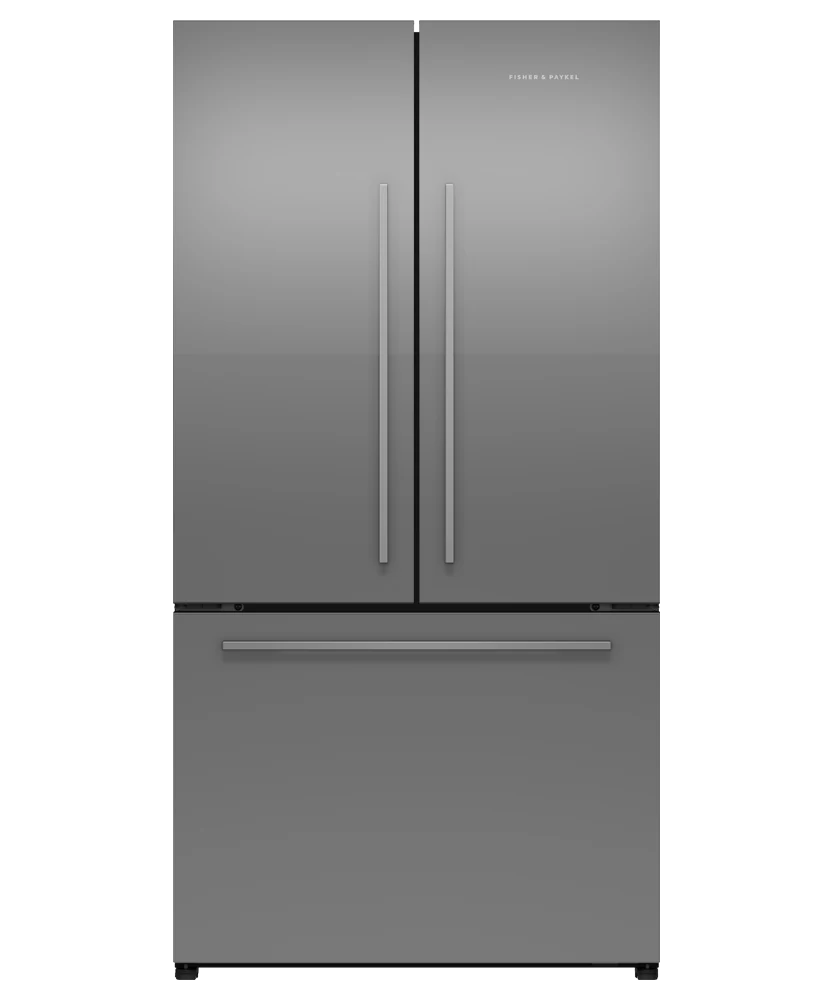
A fridge can fit inside a kitchen opening and still sit awkwardly forward of the cupboards. Fisher & Paykel’s upcoming Precision Fit range aims to bring a freestanding fridge closer into line with the surrounding cabinetry.
We attended a live preview of Fisher & Paykel’s Precision Fit range, where the close fit around the cupboards stood out. The model featured here is the RF600AMPVG1, a grey-glass, 602-litre Series 7 French door fridge with a bottom freezer, automatically filled water jugs and two types of ice.
This article combines our observations and the information shared at the preview with published technical guides. AHC has not tested its cooling performance, everyday operation or reliability.
Australian price and pre-orders
Fisher & Paykel advised that the RF600AMPVG1 is available to pre-order through Joyce Mayne. AHC could not independently confirm a public listing. Check current pricing, pre-order availability and delivery timing with your local store.
Ask for the total cost, including delivery, installation and removal of your old fridge.
If you are planning a kitchen renovation, confirm the delivery estimate before coordinating cabinetry or trades.
Start with the opening, not the capacity
Precision Fit uses smaller gaps around the appliance to bring the doors closer into line with the cupboards. It remains a freestanding fridge with visible doors, rather than an integrated model concealed behind kitchen panels.
Allow 50 mm top clearance above the refrigerator cabinet, as specified in Fisher & Paykel’s installation guide, alongside 10 mm on each side. Have the installer confirm the final opening height and ventilation arrangement before cabinetry is made.
| Measurement | RF600AMPVG1 | Opening to allow for |
|---|---|---|
| Height | 1790 mm | 50 mm top clearance; installer to confirm final opening height |
| Width | 905 mm | 925 mm |
| Depth | 690 mm | 700 mm |
Follow the model-specific installation guide for the complete clearance and ventilation requirements. The top gap alone is not a complete cabinetry specification.
The planning guide also allows a shallower installation with the doors projecting beyond the cupboards. That changes the finished appearance and how much room the fridge takes up in the kitchen.
Measure at several heights and depths, allowing for skirting boards and uneven walls. Our fridge measuring guide explains the measurements to take before ordering.
Allow room to use and clean it
A close fit around the cabinet does not remove the need for door and drawer clearance. Check nearby walls, cupboard handles and the kitchen island against the model’s opening drawings.
You need room to stand at the open freezer, reach the contents comfortably and remove shelves and bins for cleaning.
Measure the delivery route too, including narrow doorways, stairs and tight turns. Ask whether delivery includes positioning, levelling and door alignment.
Water jugs and ice: useful if you use them
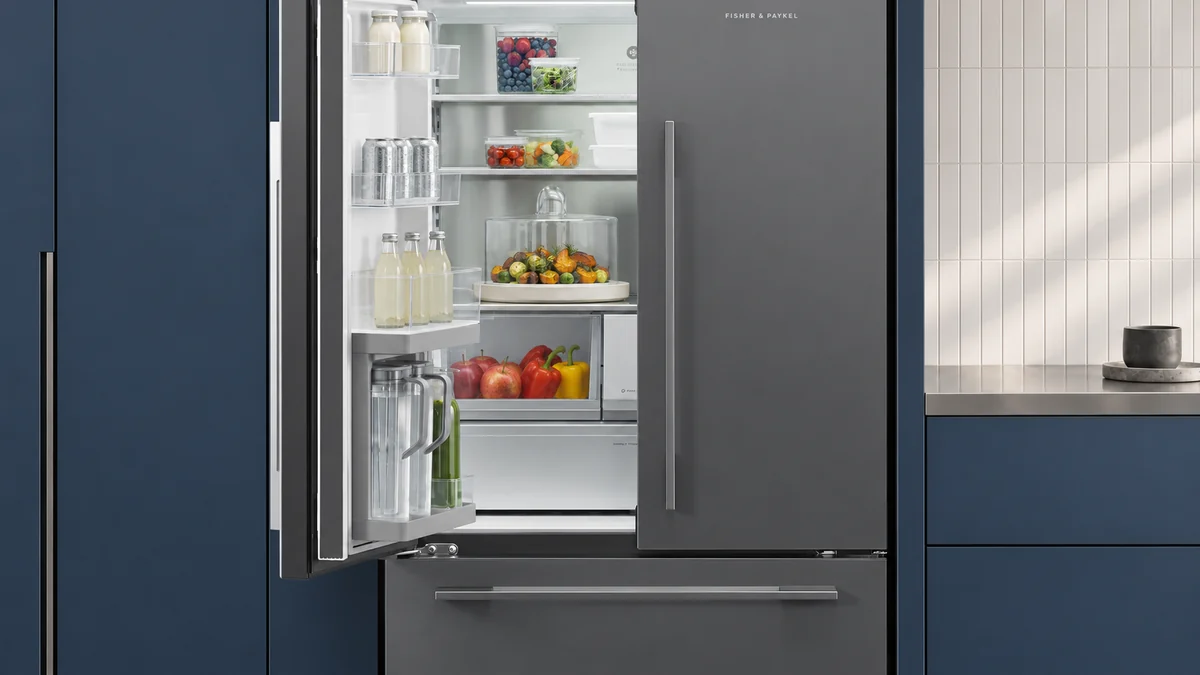
Two removable 1.3-litre water jugs hold 2.6 litres between them. They refill automatically when correctly positioned and the doors are closed. They could be convenient for taking water to the table or filling school and work bottles, but the holders need to stay clear of bulky food.
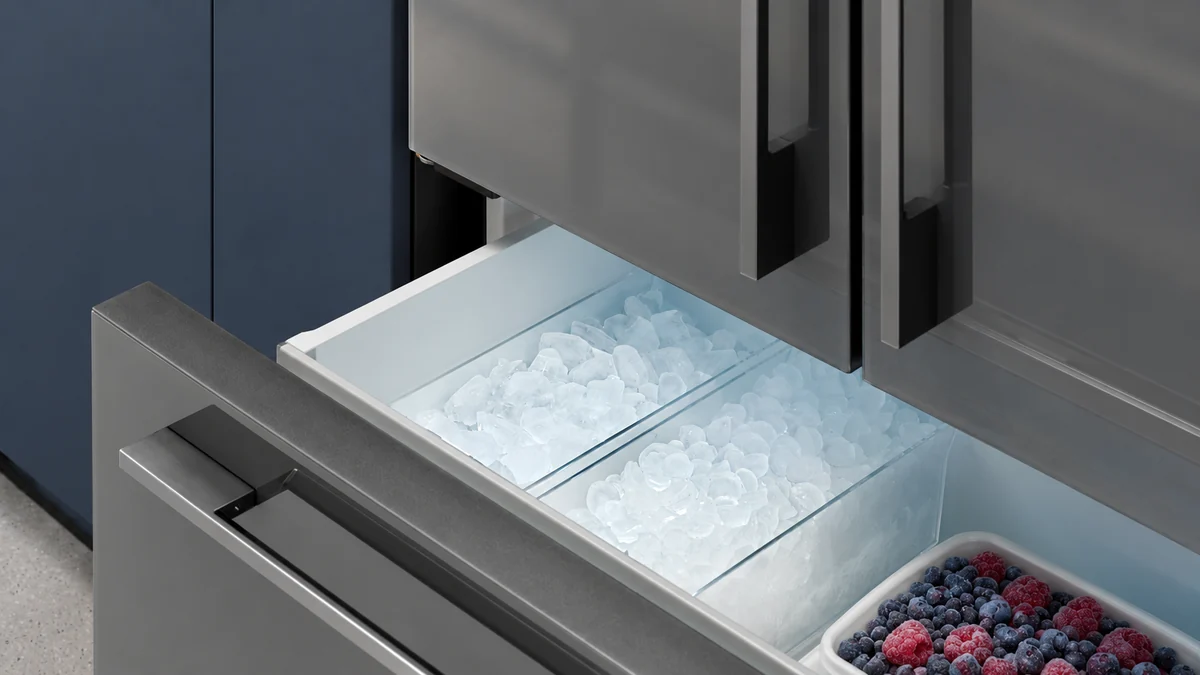
Separate ice makers produce cube and pebble ice. Each can be controlled independently, and an ice bin can be removed when frozen-food storage takes priority. Inspect the freezer layout against your usual shopping: the ice system occupies space, and total capacity alone will not tell you whether your containers fit comfortably.
The water and ice features require a plumbed drinking-water connection. Include that work in your installation quote. Ask the installer to confirm the water-pressure requirements, as the published documents give differing minimum figures.
The tap and power connection also need to remain accessible without compromising the required space behind the fridge.
Follow the model’s commissioning instructions before drinking the water or using the ice. AHC has not verified refill speed, chilling recovery or daily ice output in household use.
Storage for changing household needs
Published capacity is split into 415 litres of fridge space and 187 litres of freezer space. A separate variable-temperature drawer offers these chilled settings:
| Setting | Temperature |
|---|---|
| Meat and seafood | 0°C |
| Drinks | 2°C |
| Fruit and vegetables | 3°C |
These settings could help when storage needs change, such as making room for drinks before visitors arrive. The drawer does not provide an additional freezer compartment.
When inspecting the fridge, check whether your larger food containers fit and whether the drawers are easy to access. Households that buy frozen food in bulk should pay particular attention to usable freezer space.
Running costs and ongoing care
The Australian energy label shows five stars and 357 kWh per year. At an illustrative electricity usage rate of 30 cents per kWh, that equals about $107 a year.
Actual consumption depends on conditions and use. This estimate excludes replacement filters and the electricity supply charge you already pay for your connection.
Ask for the compatible water filter’s current price and recommended replacement interval. The jugs, ice bins, shelves and seals also need regular cleaning. Follow the care instructions for the grey-glass finish; do not assume ordinary glass cleaner is suitable.
SmartHQ connectivity provides software updates and filter reminders. Published specifications list security updates until 31 July 2031. Consider that support date separately from how long you expect to own the fridge.
Check after-sales support
The Australian manufacturer’s warranty provides two years of parts and labour cover. A further three years covers sealed-system parts; labour and specified associated costs are payable by the owner during that additional period. Australian Consumer Law rights also apply.
Before buying, check authorised service coverage for your postcode, possible travel charges and spare-parts support. Keep the installation and care documents with your purchase records.
Before-you-buy checklist
- Allow 50 mm above the refrigerator cabinet and 10 mm on each side, and have the installer confirm the final cavity dimensions and ventilation requirements.
- Check door swing, freezer access and the delivery route.
- Call your local store for a negotiated price and delivery estimate.
- Obtain a total quote covering delivery, plumbing and installation.
- Compare usable storage with the space occupied by water and ice features.
- Check filter costs, local service coverage and warranty conditions.
Our take
The RF600AMPVG1 is worth shortlisting if you want a freestanding fridge to sit neatly within your kitchen and would regularly use the chilled-water jugs and two ice types.
It is less appealing if plumbing is difficult, you rarely use ice or frozen-food storage takes priority. The close-fitting appearance made a strong first impression, but confirmed installation clearances and a practical storage layout matter more than the showroom finish.
Compare the negotiated total installed cost with other models that meet your household’s needs. Everyday performance and long-term reliability remain untested by AHC.